Manufacturing
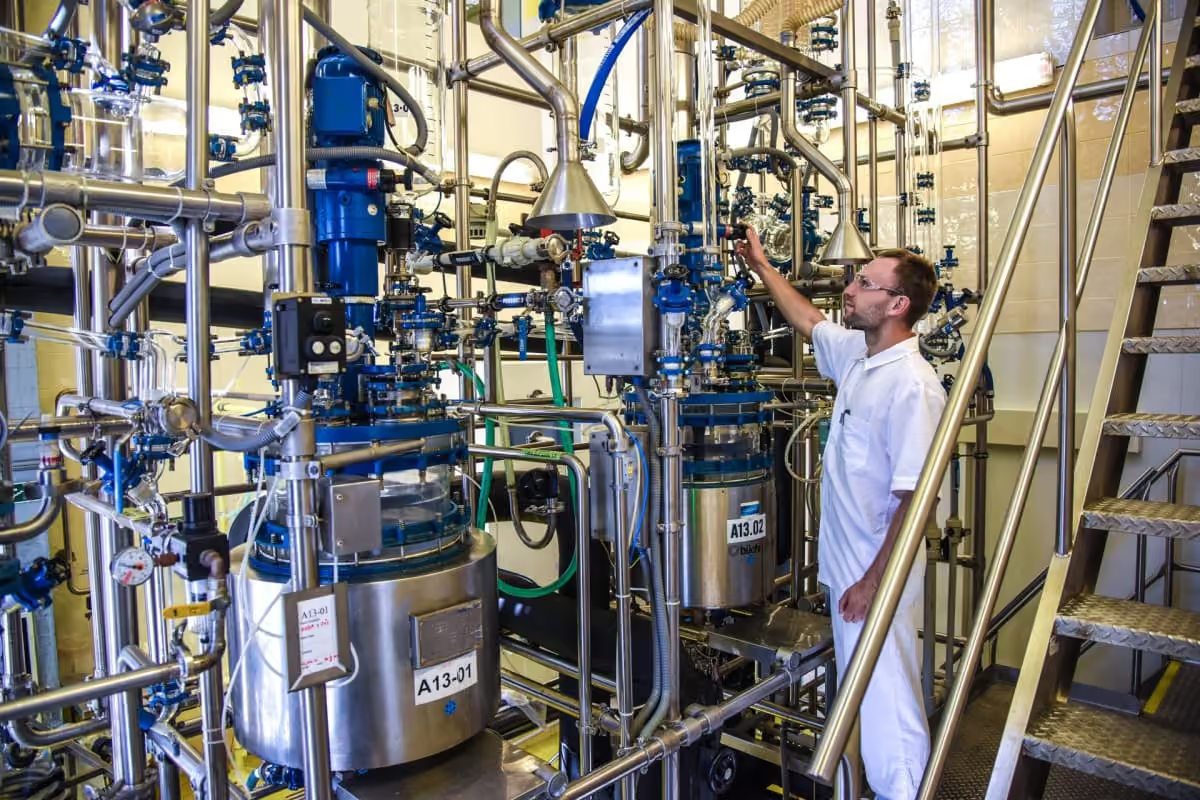
Our manufacturing operates under GMP (cGMP) and ISO systems and is carried out in several production facilities. Each facility comprises several production modules, used predominantly as multipurpose units for manufacturing several different products.
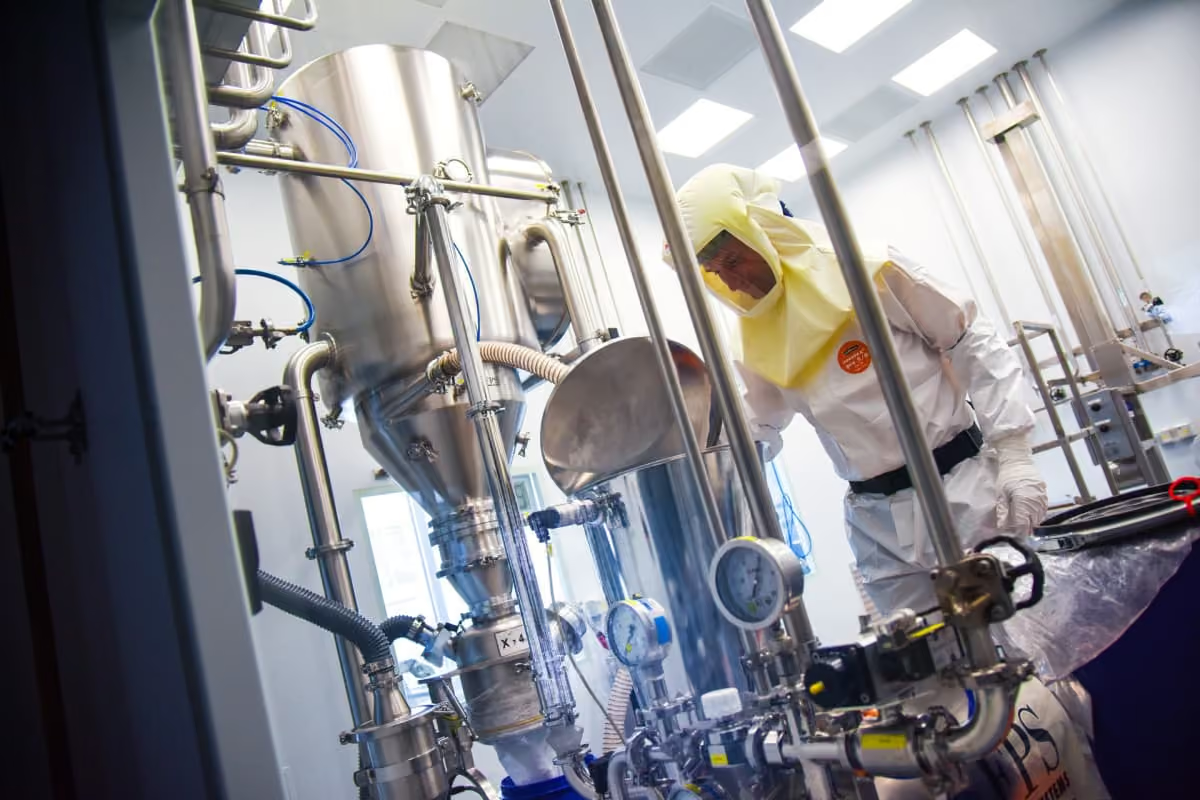

manufacturing equipment
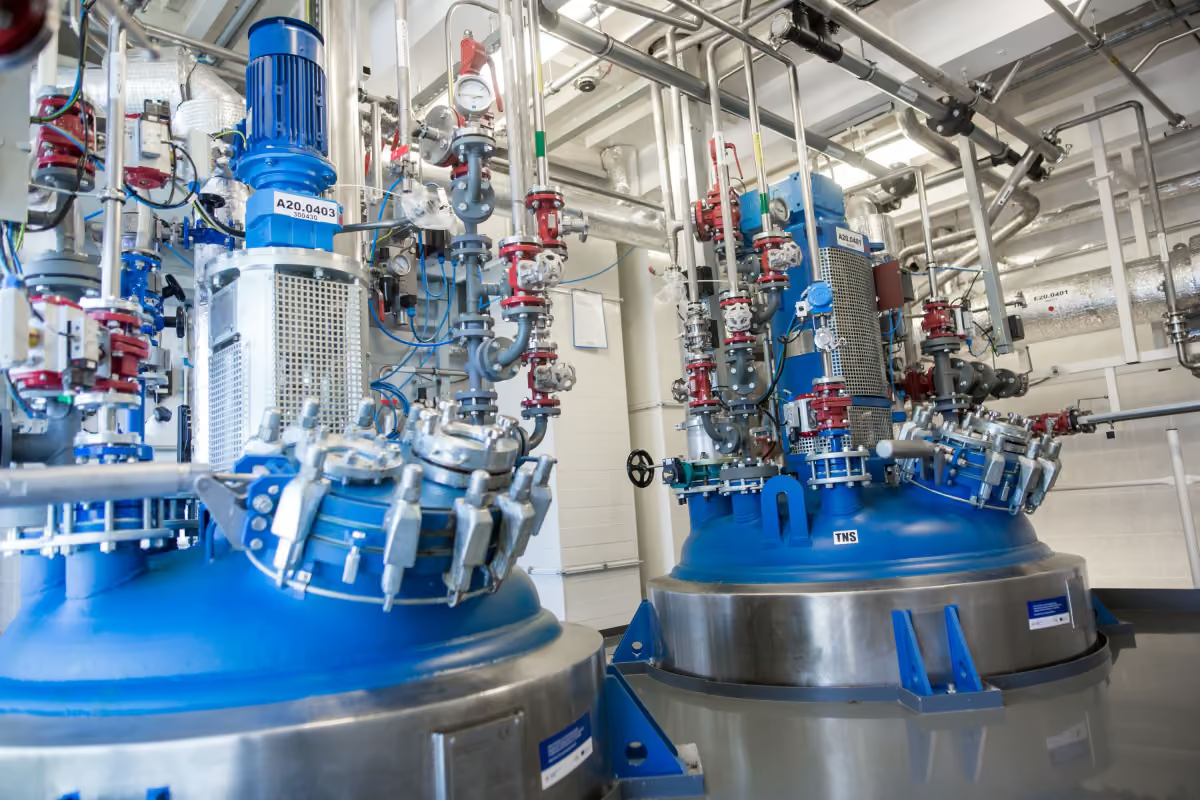
Our stainless-steel, enamelled and Hastelloy C22 manufacturing equipment supports batch sizes ranging from 100 grams to several kilograms in the kilolab, and from 5 kg to 250 kg in reactors with capacities from 250 to 6,300 litres (the standard reactor capacity is 1,600 litres). For manufactured APIs, we also provide particle-size adjustment—from sieving through various milling grades to micronisation—together with final product packaging in a dedicated production building.
Established
Established technologies
Our manufacturing programme specialises mainly in the chemistry of heterocyclic compounds. Industrial processes have been implemented for many fundamental chemical reactions used to manufacture our current API portfolio, including:
- Grignard reactions (including sulfur),
- various condensation reactions,
- Friedel–Crafts reactions,
- halogenation,
- oxidation,
- reduction (Zn),
- esterification,
- resolution of racemic mixtures,
- low-pressure hydrogenation
- reactions in the presence of a phase-transfer catalyst.
- enzymatic reactions (one application to date)
Reactions are carried out at temperatures from −20 to +140°C (or from −90 to +300°C in some reactors using thermostats) and pressures from −80 to +300 kPa (with an absolute vacuum down to 5 mbar in certain equipment).
New
New technologies
In addition to established technologies, we also seek new manufacturing opportunities that require mastery of new technologies. To develop, optimise and transfer them successfully to manufacturing scale—with maximum cost and time efficiency—we draw on strong capabilities comprising primarily:
- a creative team of manufacturing and process-technology specialists
- an extensive research and development (R&D) department
- suitable manufacturing equipment for gradual scale-up (laboratory reactors, kilolab and pilot plant)
- the necessary infrastructure (a fully equipped analytical centre—NMR, GC-MS, HPLC, DSC and laser diffraction), a team of quality assurance specialists and additional capabilities
- two-way collaboration with numerous universities and other research institutions